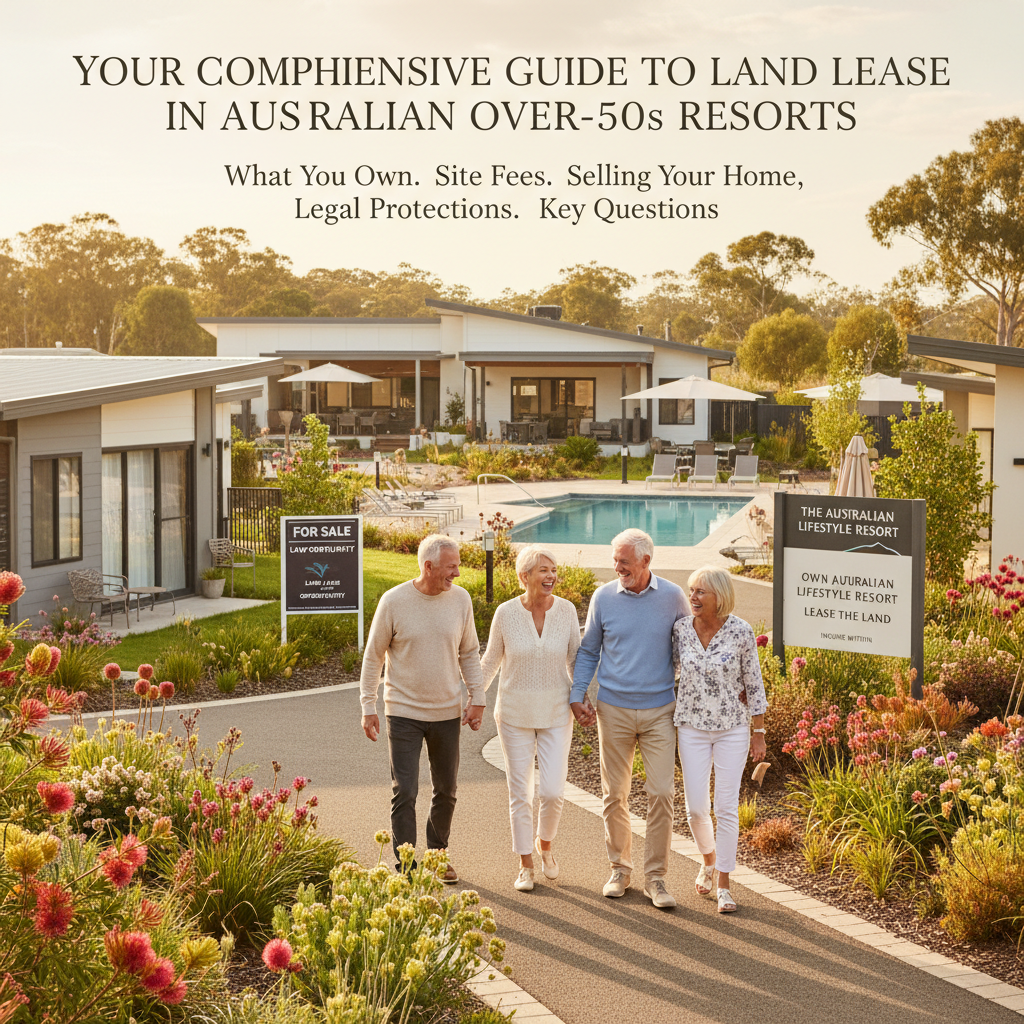
Understanding Land Lease in Over-50s Lifestyle Resorts
Published 23 May 2026
Are you considering a move to an over-50s lifestyle resort in Australia? If so, you’re not alone! These vibrant communities offer engaging social experiences, a range of amenities, and the ease of maintenance-free living. However, understanding how land lease works is crucial before making your decision. In this comprehensive guide, we’ll walk you through the essentials of land lease agreements in lifestyle resorts, ensuring you feel informed and confident in your choices.
Understanding Land Lease in Lifestyle Resorts
What Do Residents Own vs. What Do They Lease?
One of the first things to understand about over-50s lifestyle resorts in Australia is the distinction between ownership and leasing. Each State has it own particular legislation so it is important to review the Site Agreement and and or Contract for sale prior to Purchase with your Solicitor or Conveyancer prior to purchase, this is an important step to ensure you are fully aware of what specifics you are entering into and if it suits your particular needs.
-
Ownership: In a land lease community, you own your home, which can be a manufactured or prefabricated property. This means you take full responsibility for the maintenance and upkeep of your home.
-
Leasing: What you lease is the land on which your home is situated. Instead of purchasing land outright, residents enter into a long-term lease agreement with the resort operator. This arrangement can last for decades, typically around 99 years or in Perpetua, allowing long-term stability.
How Site Fees Work
With land-leased living, the terms ‘site fees’ and ‘lease payments’ often come into play. Here’s what you need to know:
-
Site Fees: These are the fees you pay to the resort operator for leasing the land. They can vary widely based on the location and the amenities offered by the resort. Site fees usually cover the cost of land maintenance, amenities, and access to community facilities.
-
Regular Increases: Site fees are typically adjusted annually, usually tied to the Consumer Price Index (CPI) or another agreed-upon measure. It’s important to discuss potential increases with the community operator and understand how they affect your budget.
Selling Your Home: What Happens Next?
As with any property, there may come a time when you decide to sell your home. Here’s how the process works in a land lease community:
-
Selling Your Home: When you sell your home, you typically keep the profits from the sale. This means you can benefit from any increase in market value over time. However, the land lease agreement will determine what happens next.
-
Transfer Fees: Most communities don't charge a transfer fee or exit fee when you sell your home. If there are any fee they must be clearly stated in your lease agreement you entered into when you purchased the home. Understanding these fees ahead of time can help you budget accordingly.
Legal Protections Under the Residential Land Lease Communities Act
For peace of mind, Australian law provides specific protections for residents living in land lease communities. The Residential Land Lease Communities Act governs these arrangements, ensuring that residents have certain rights, including:
-
Transparency: Operators must provide clear information about fees, rules, and any changes that might affect residents.
-
Protection From Unfair Practices: The Act includes provisions to protect residents from unfair lease terms and gives residents the right to take grievances to the relevant tribunal if disputes arise.
-
Right to Reside: This legislation helps protect your right to reside in your home for the duration of the lease, provided you meet the agreements laid out in your contract.
Key Questions to Ask Before Signing
Before committing to a land lease community, it’s crucial to ask the right questions to ensure the best fit for your lifestyle. Here are some important inquiries:
-
What is included in the site fees?: Understand what services and amenities you’re paying for.
-
What is the process for selling my home?: Gain clarity on the sale process and any associated fees.
-
Are there restrictions on who can buy my home?: Some communities have rules about potential buyers; knowing these can save you headaches later.
-
How often do site fees increase?: Get specific information on historical increases to better plan your budget.
-
What are the community rules?: Knowing the rules can help ensure you're comfortable with the community lifestyle.
Conclusion
Moving to an over-50s lifestyle resort can offer a fulfilling lifestyle filled with freedom, community, and adventure. Understanding how land lease works is crucial for making informed choices about your future. Knowledge of ownership, site fees, selling your home, and legal protections can help you navigate the nuances of lifestyle living with confidence.
If you’re ready to explore the joys of resort living for the over-50s, take your time, do your research, and don’t hesitate to reach out with questions. You deserve a fulfilling lifestyle in a community that suits your needs — and armed with the right information, your journey can be an exciting one!
The information contained in this article is general in nature and is not intended to be financial or legal advice. Each State & Territory has it own legislation for Manufactured homes, so it is important to review the Site Agreement and and or Contract for sale from each individual land lease community and make your own investigations prior to purchase. You should provide all information provided for the purchase of a home in a land lease community to your Solicitor or Conveyancer, to ensure you are fully aware of what specifics you are entering into and if it's suitable your particular needs.